
This is one of the more experienced weavers. She is working on a very interesting piece of weaving:

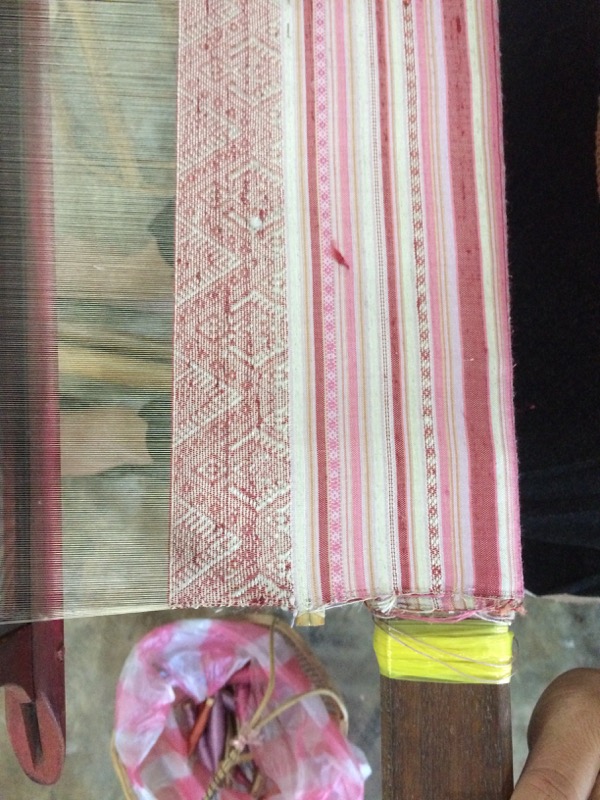
The pattern that is currently being woven uses a technique called supplementary weft weaving. The weaving alternates rows of plain-weaving (using regular heddles controlled by foot pedals) with rows of patterned weaving.
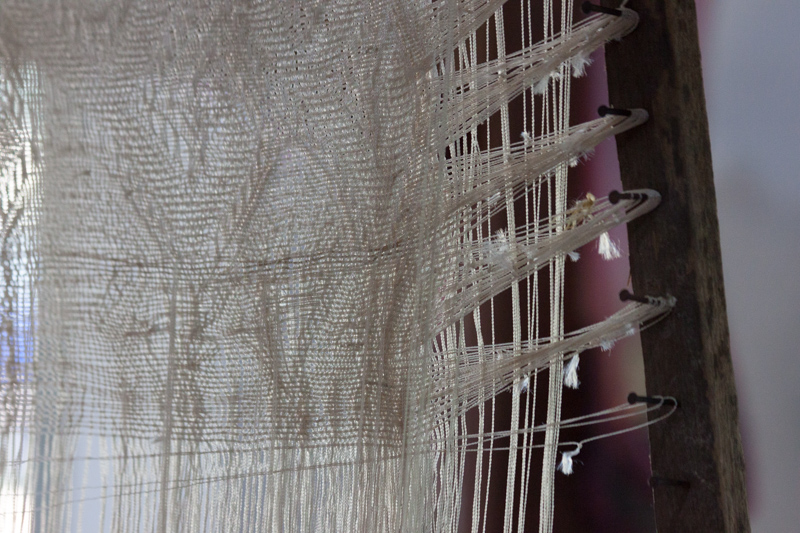
For the patterned weaving, the warp has been threaded through individual string loops that hang vertically (attached top and bottom of the loom) behind the beater (and plain-weave heddles). Sticks are woven through these “heddle strings” to describe the pattern that will be woven in the actual fabric.
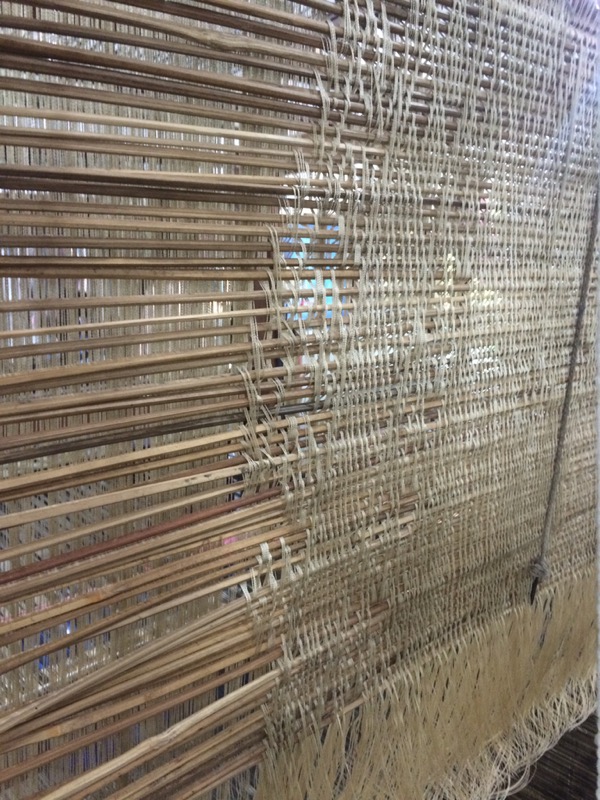
The weaver lowers the lower-most stick in the stack to the surface of the warp strings and moves the stick backwards and forwards to separate the “heddle strings.”
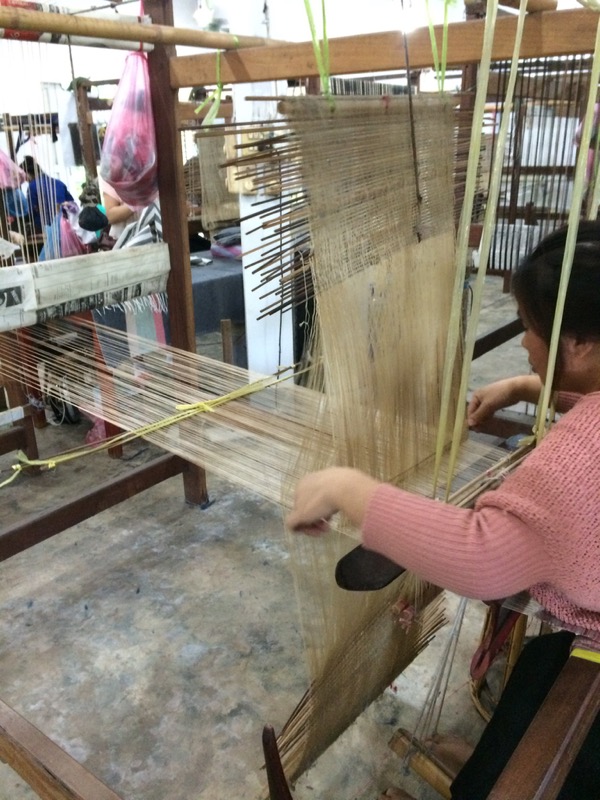
The weaver then grabs the front “heddle strings” (representing the upper threads of the pattern) a hand-full at a time and lifts them, putting a shed stick between the upper and lower warp threads.
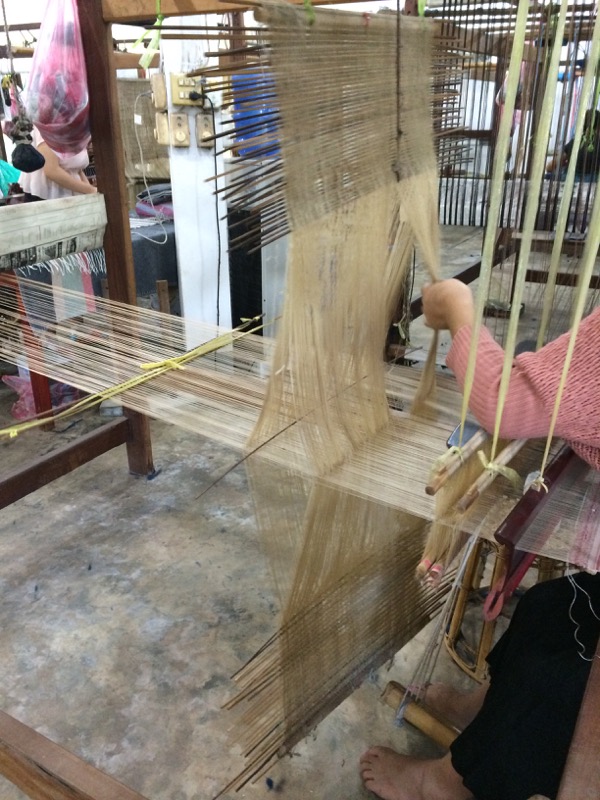
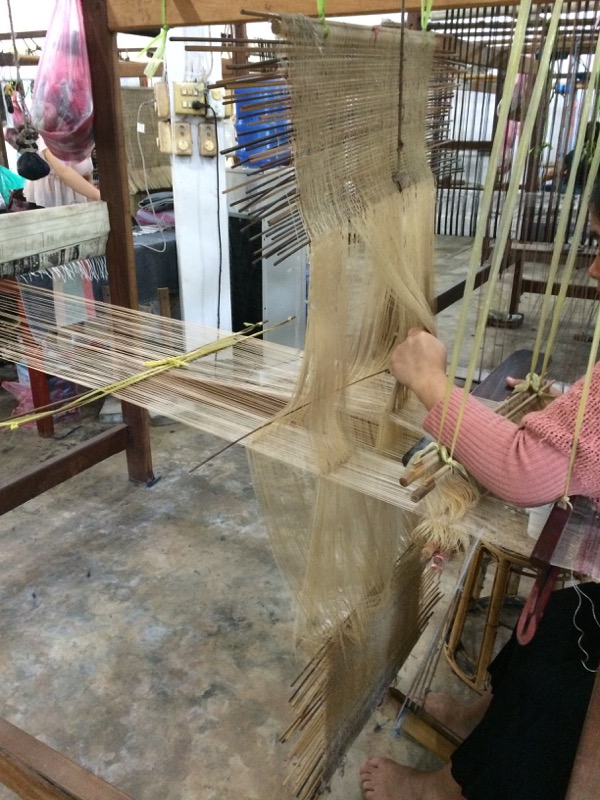
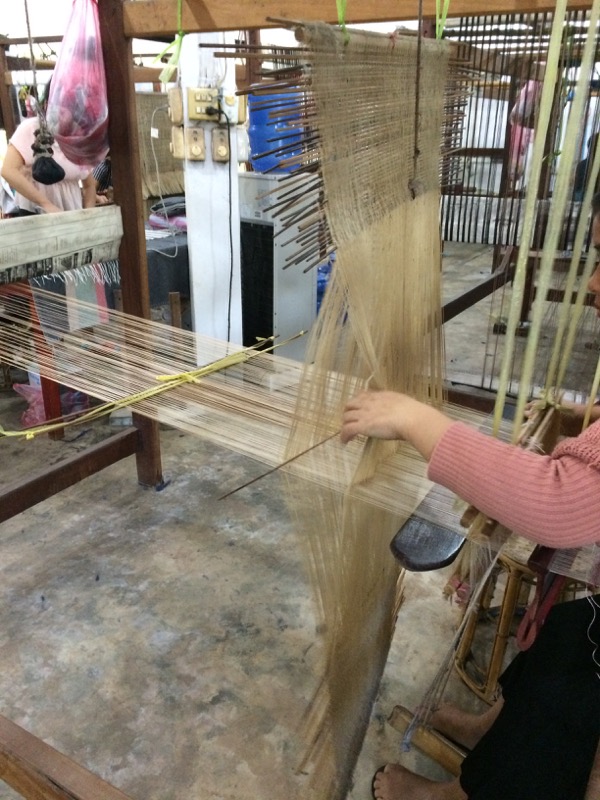
At this point, the pattern stick is re-positioned between the “heddle strings” below the warp, to preserve the pattern.
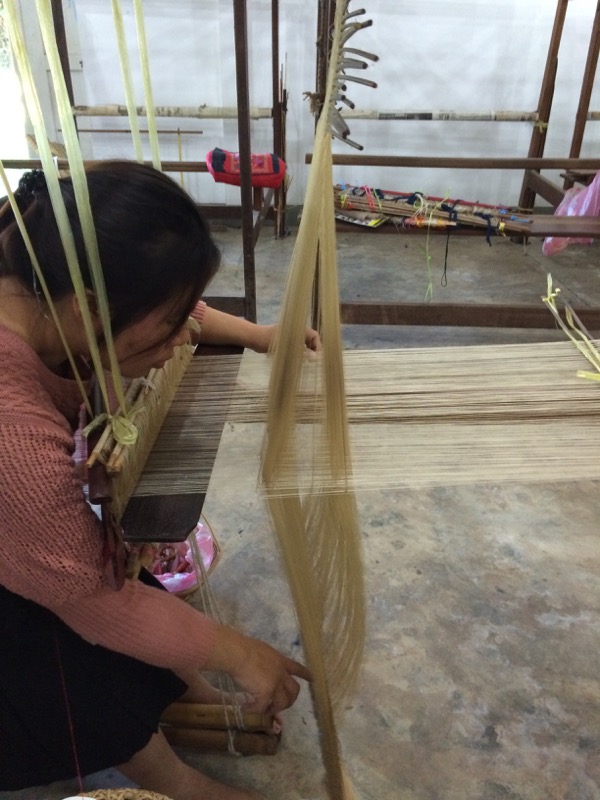
The shed stick is now used to separate the upper and lower warp threads, and the weaver throws the shuttle.
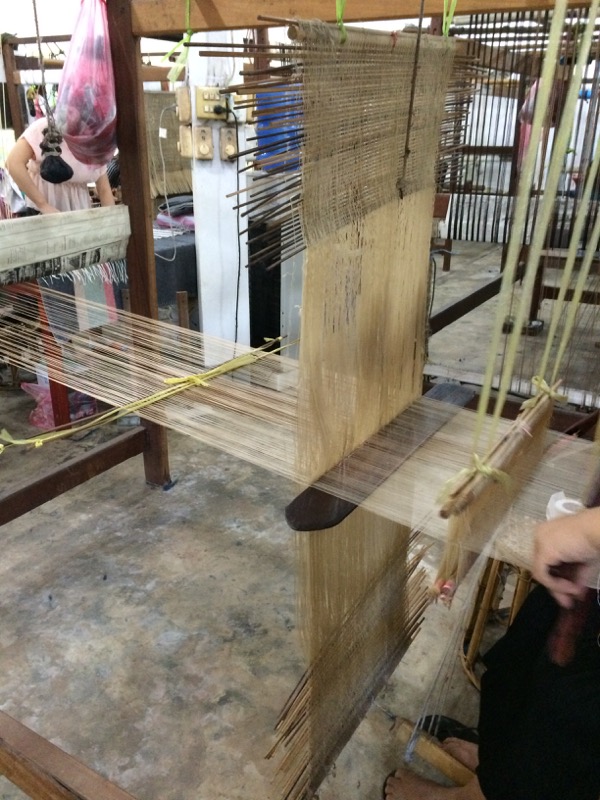
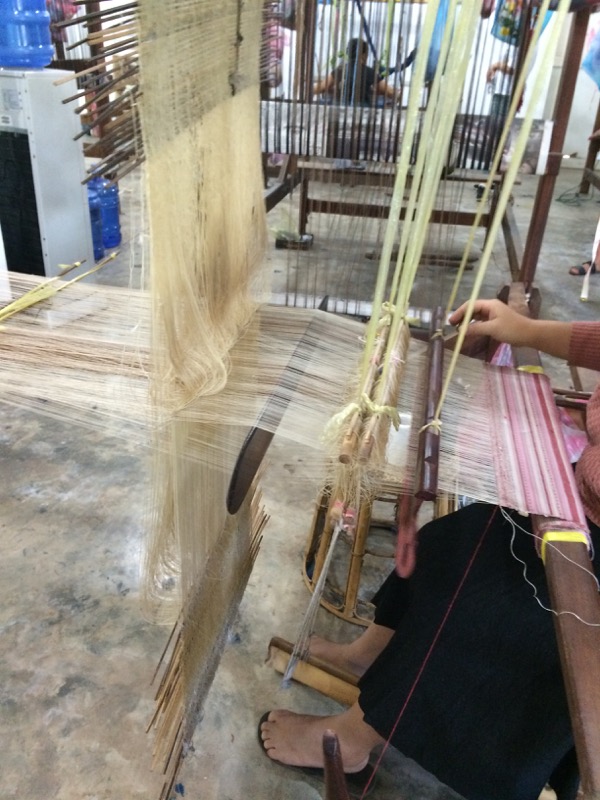
Whew – all that for a single row of the pattern!
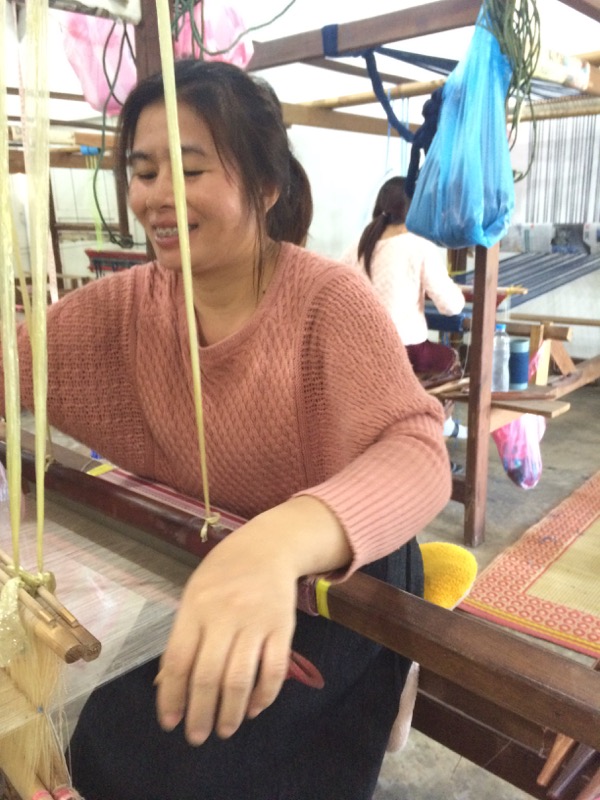
This pattern consists of about 50 rows (and thus has about 50 sticks in the heddle strings.) Once all the sticks have been moved below the warp, the weaver will reverse the pattern, basically using the sticks from below to separate the heddle strings.
Here’s another piece, which was being worked by one of the weaving instructors at Houey Hong. In addition to a warp pattern of over 100 rows, she is using multiple colors of weft in each row, resulting in a very rich and complex textile.
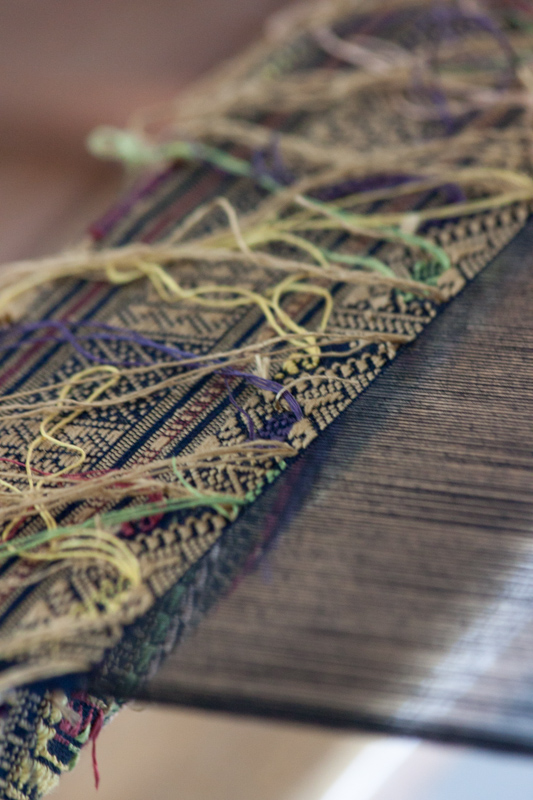
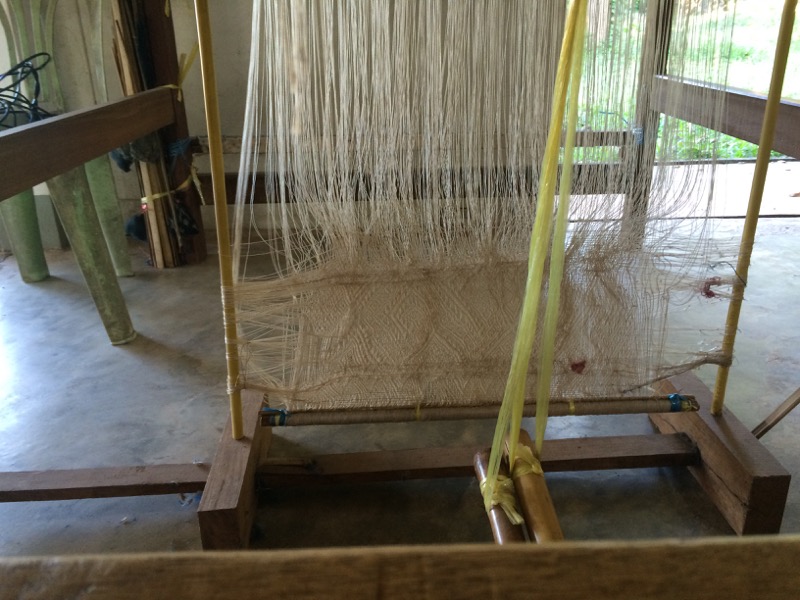
The pattern is traditional to the area of Laos in which she was raised. Given space constraints, the weaver uses string instead of sticks to describe the pattern in the heddle strings.
Here are the heddle strings above the warp threads:
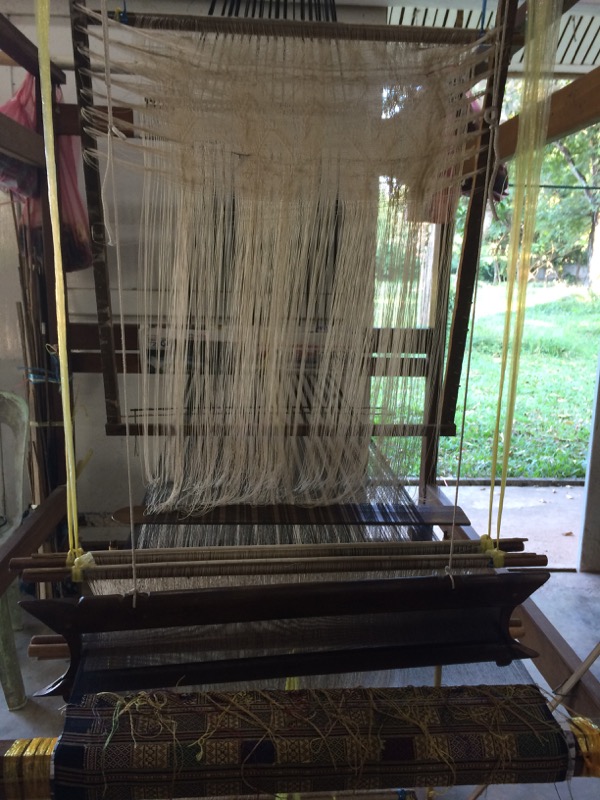
And below the warp threads:
This close-up shows the heddle pattern more clearly:
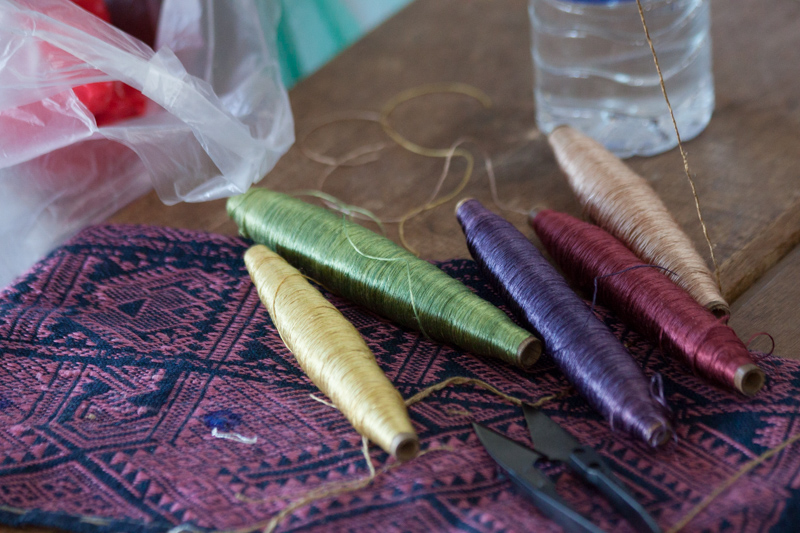
The weaver had made a sample with a single color of weft (magenta) to confirm the pattern is correct before proceeding with the piece. Here is the sample, together with some of the silk she is using for the finished piece:
After writing all this up, I found a blog posting from someone who seems to have taken a class in this type of weaving. There are lots more details in the technique, if you are interested here:
http://einesaite.blogspot.com/2013/05/chok-and-kit-lao-supplementary-weft.html