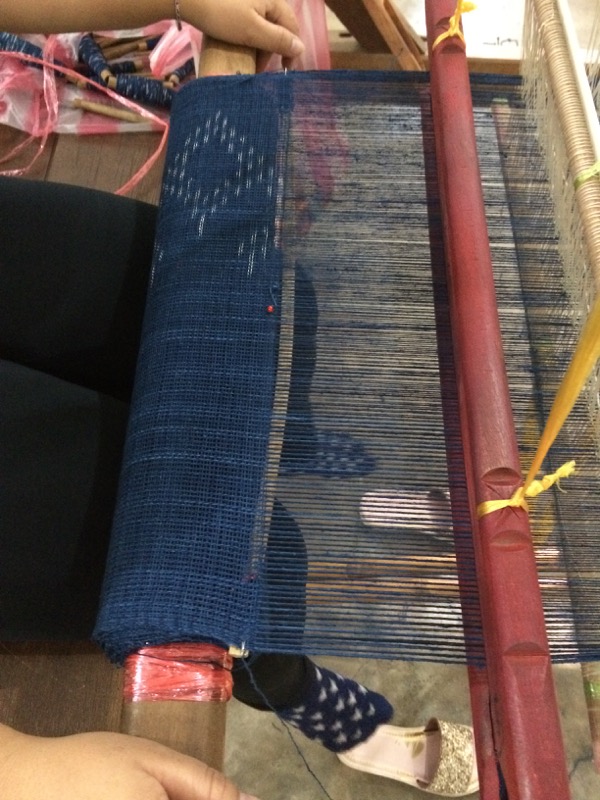
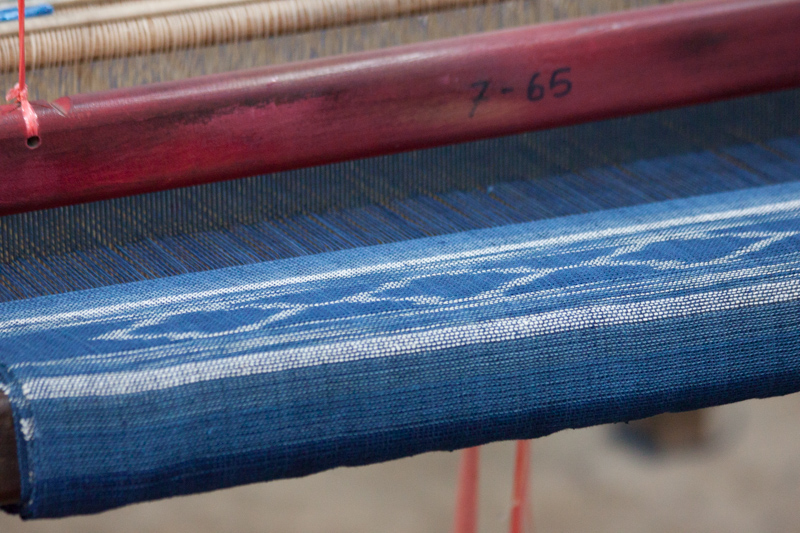
Ikat is plain weaving that has a pattern dyed into the yarn prior to being woven. For cotton, the pattern is typically dyed into the warp yarns. With silk, the warp yarns are monochromatic and the pattern is tie-dyed in the weft yarn.
In the sample above, the ikat is the diamond design, which is natural silk color (white) on an indigo background.
To create this, the weft is stretched across a frame in rows the width of the finished piece of cloth. Based on the planned pattern, the weft threads are wrapped tightly, so that they will resist dye.
I didn’t see this part of ikat done; however, there is a nice picture of the weft frame and the process of wrapping the weft to resist dying in this class description for ikat weaving at Houey Hong:
http://www.houeyhongvientiane.com/blog/special-workshop-ikat-weaving
After being wrapped, the threads are taken off the frame in bundles and dyed in an indigo bath.
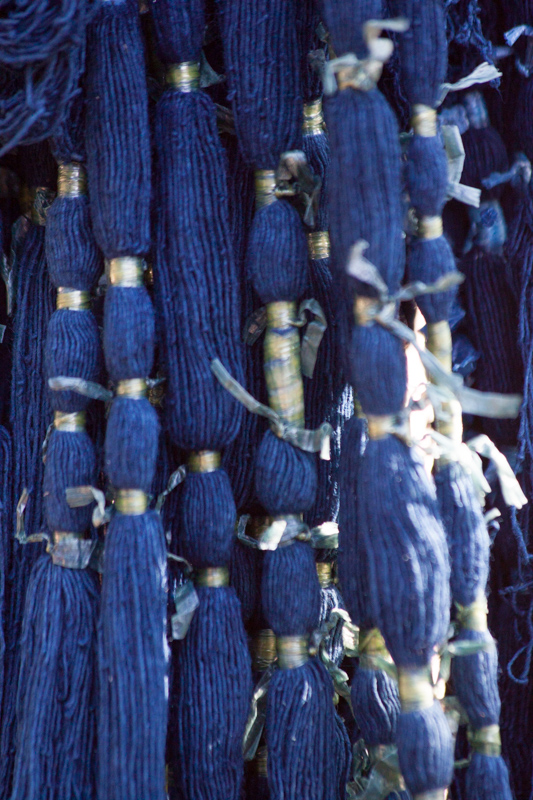
The bundles are then wound onto shuttles for use in weaving. Here are some shuttles, ready for weaving. The ordering of the bundles – from the point they are taken off the frame, through dying and then weaving – has to be preserved, so that the pattern will turn out as planned.
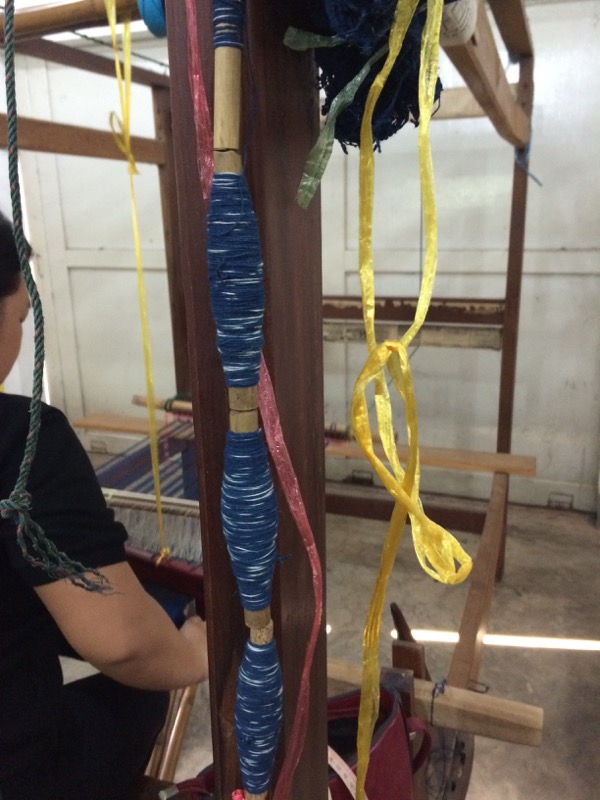
Each time the weaver throws the shuttle, she adjusts the thread to ensure that the pattern is aligned correctly: