
Lesser known in the West than Thai or even Cambodian food, Laotian cuisine was the pleasant surprise of our trip, with both interesting flavors and variety.
Dyen Sabai
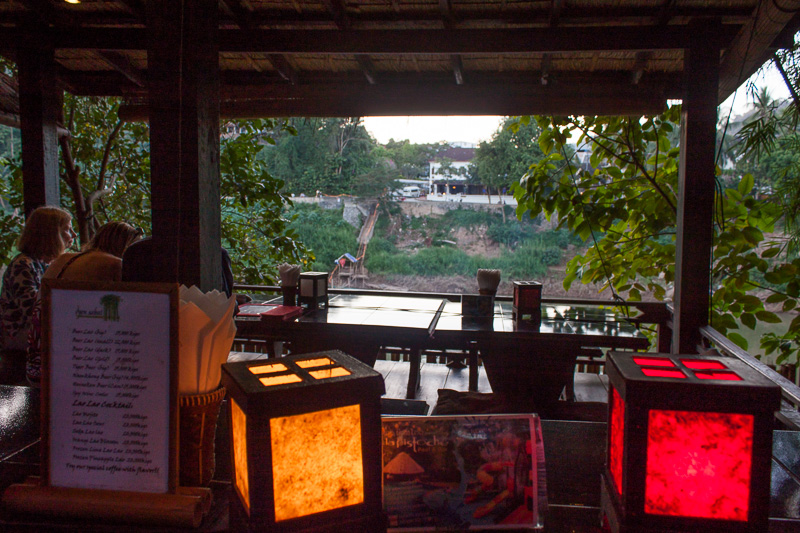
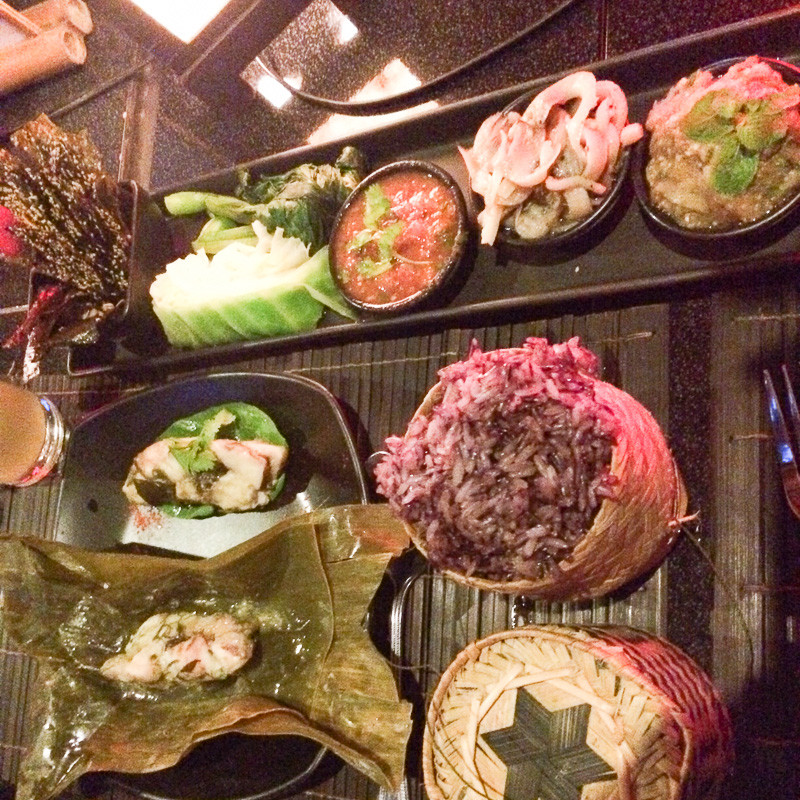
This is dinner on our first night in Laos, at a riverside restaurant in Luang Prabang.
At the top, left to right: khai phaen (river weed fried crispy), steamed vegetables, tomato salsa, mushroom jeow, and smoked eggplant jeow. On the left, fish in banana leaf. On the right, pilaf with black and glutinous rice.
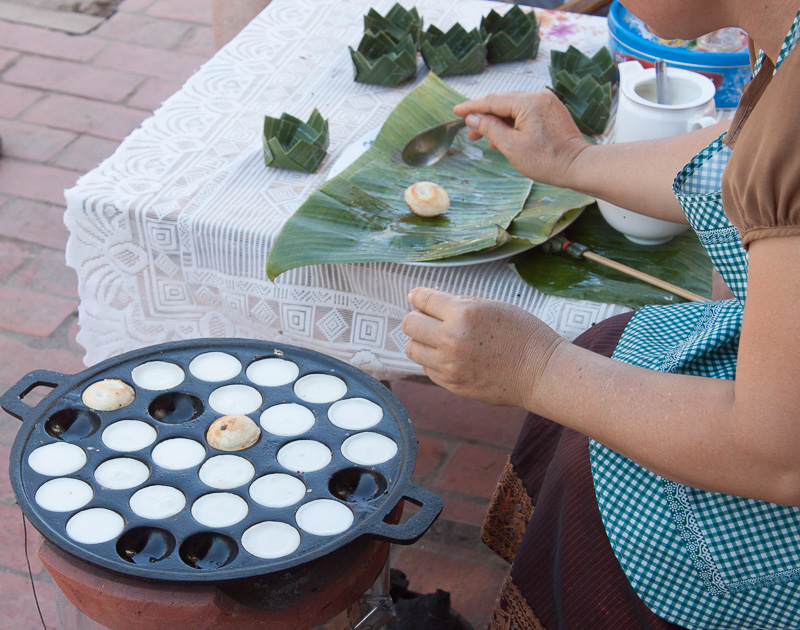
Coconut cakes
The bare minimum essence of street food: this woman has brazier, a cast iron muffin pan, a little table, a tiny stool, and a few cooking implements. Here she is fanning the coals:
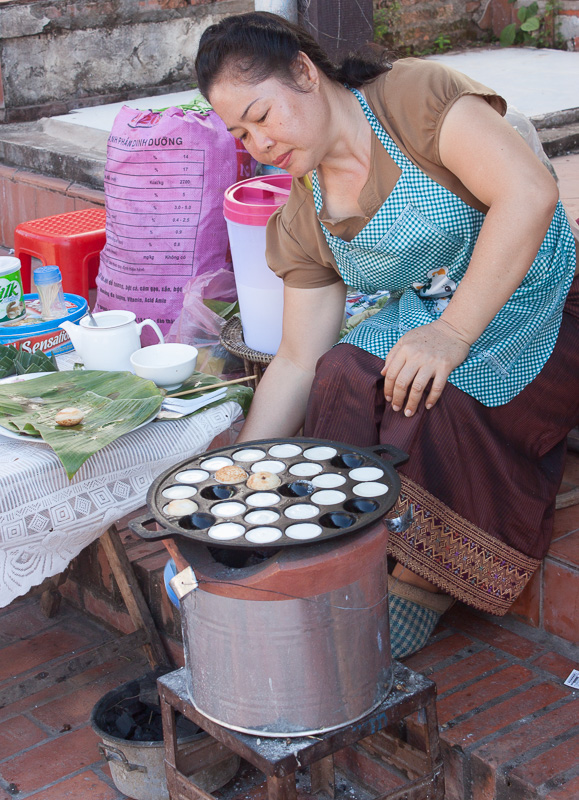
The thin batter is poured in…
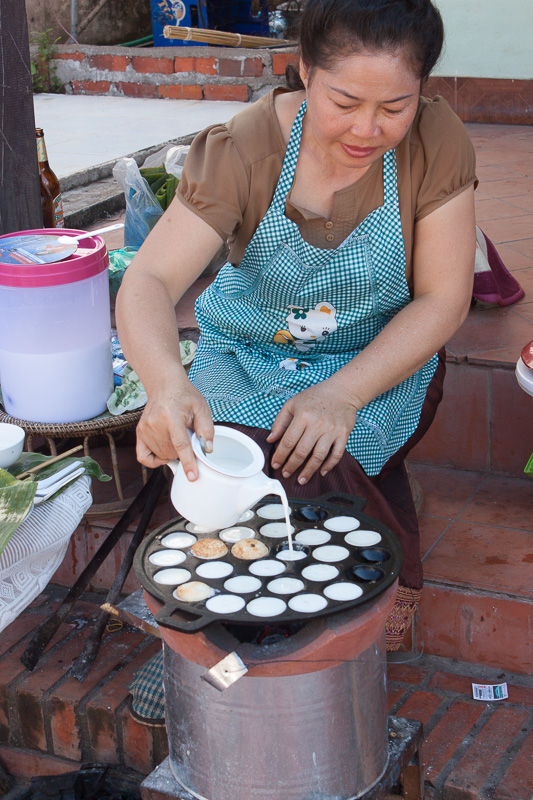
… and cooked until they set, then doubled up to make a spherical cake…
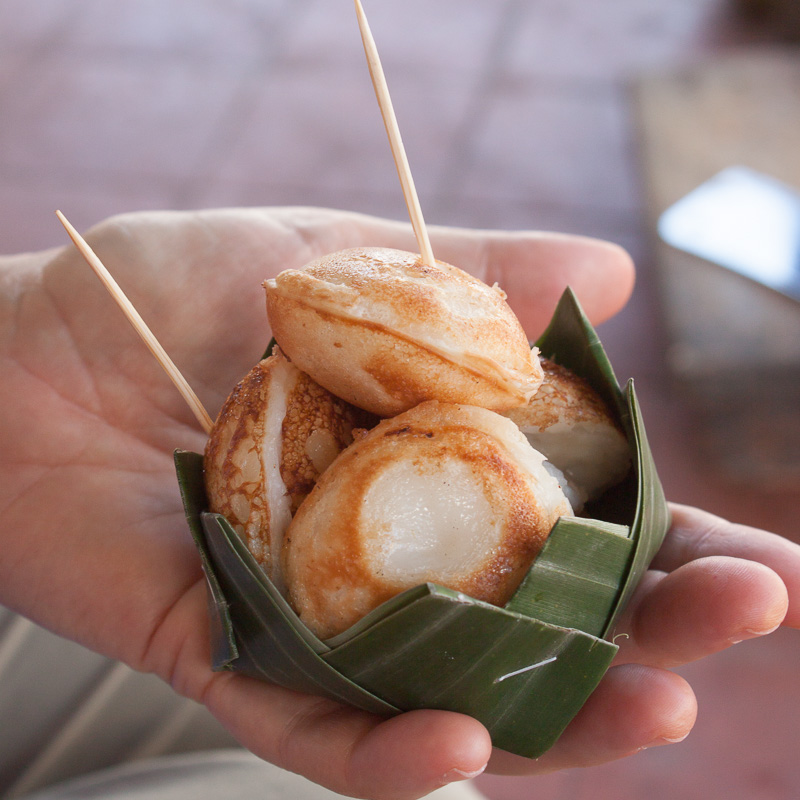
… and served in a banana leaf cup; note how the cups are held together:
Khaiphaen
This is a restaurant that is also a teaching facility. They aim to help marginalized young people by teaching them skills in the hospitality trades. The restaurant was started by the NGO Friends International.
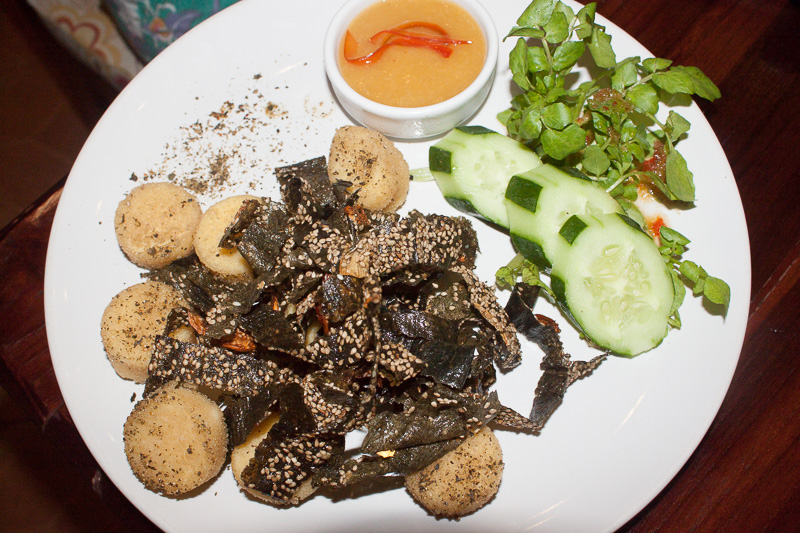
It is named after a popular Laotian snack made of river weeds from the Mekong. The weed is somewhat like a cross between kombu and nori seaweeds. The only preparation we have seen is frying until crisp and sprinkling with sesame seeds. Here it is as an accompaniment to soft tofu fried crispy and spicy green mango dip:
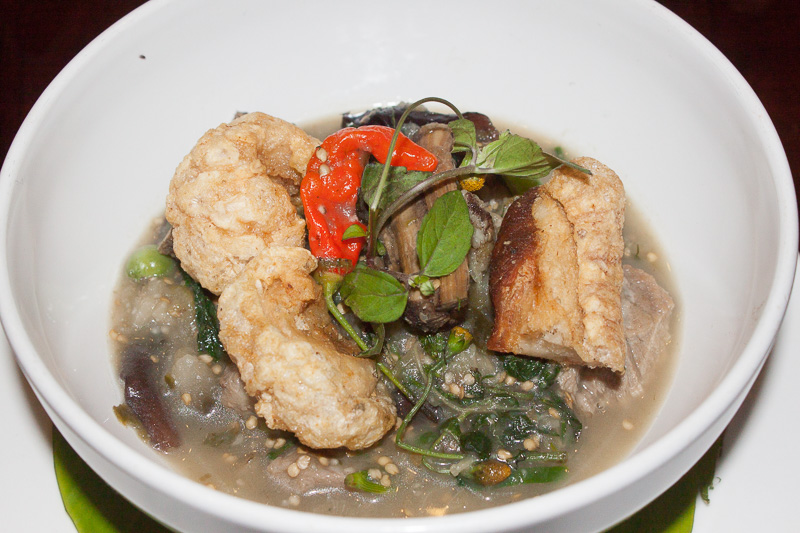
Another traditional Luang Prabang dish is Or Lam. It is a meat stew with eggplants and greens. The meat can be pork or water buffalo, but there is always pepperwood. This wood is used for seasoning but not eaten, in the same way that a stick of cinnamon is used. This is Khaiphaen’s version of Or Lam; that’s pork cracklings on top. Hiding under the basil is a chunk of pepperwood.
Makphet
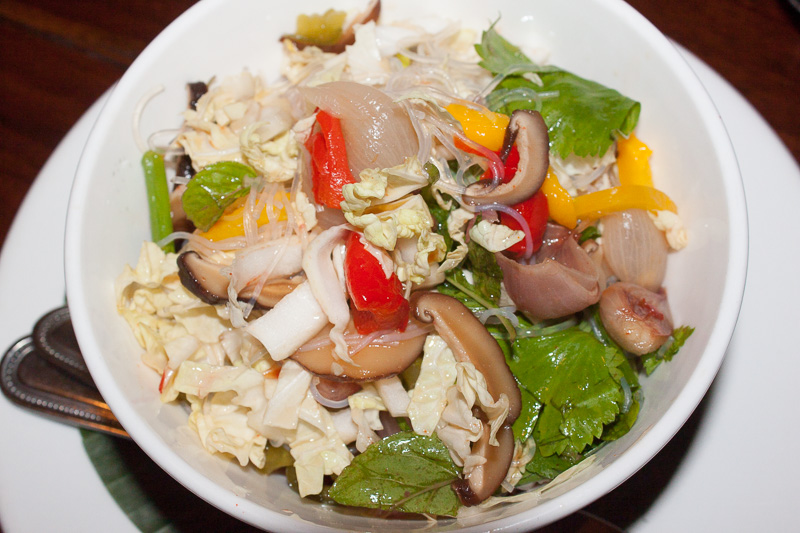
Another restaurant started by Friends International, Makphet is in Vientianne, the capital city. This is their glass noodle salad:
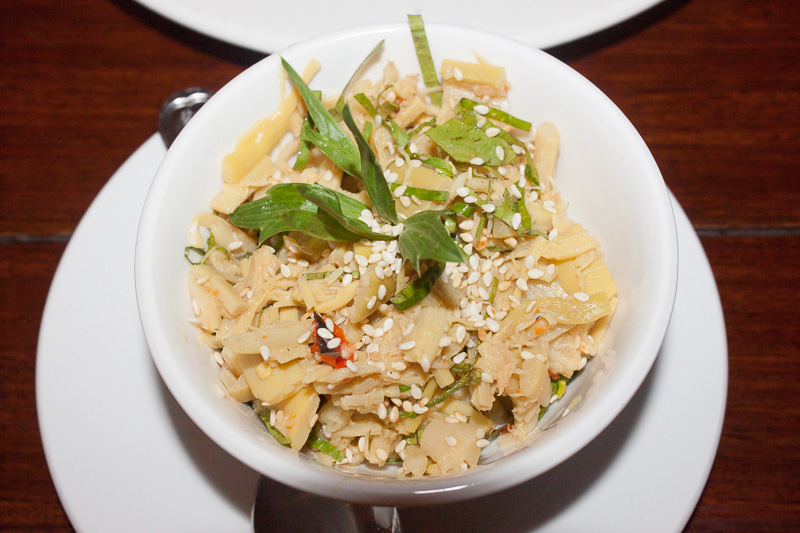
There are a number of Laotian dishes known as jeows, which is frequently translated as “dips”. You are supposed to eat them with balls of sticky (glutinous) rice rolled in your hand. We find some of them are really too thick and/or chunky for dipping. Spoons work great for this young bamboo and ginger jeow:
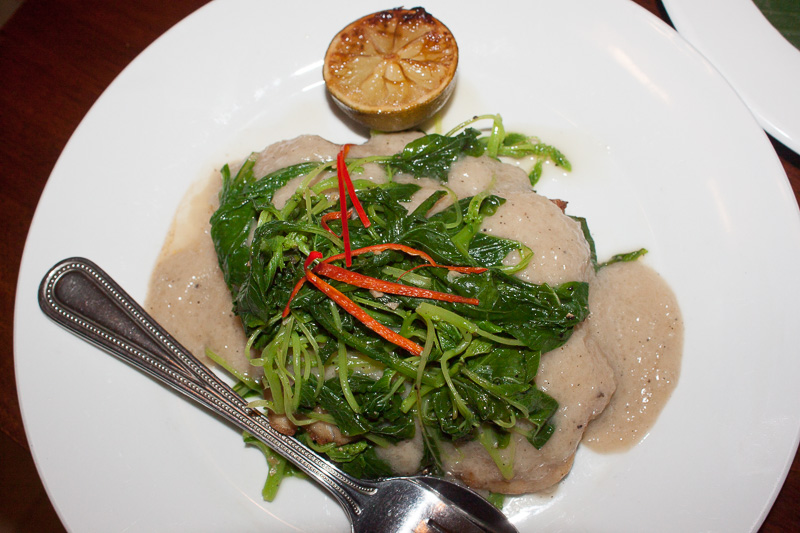
This is a grilled fish filet (yes it’s buried in there somewhere) with coconut and lime sauce and steamed local greens:
More street food
There are many sidewalk vendors in every part of town. From the single-brazier operations up to the semi-permanent places with refrigeration and running water. On this trip, we suspended enforcement of “cook it, peel it, or forget it!”
This is sidewalk cafe on Quai Fa Ngum. Yes, they still refer to some streets with French words.
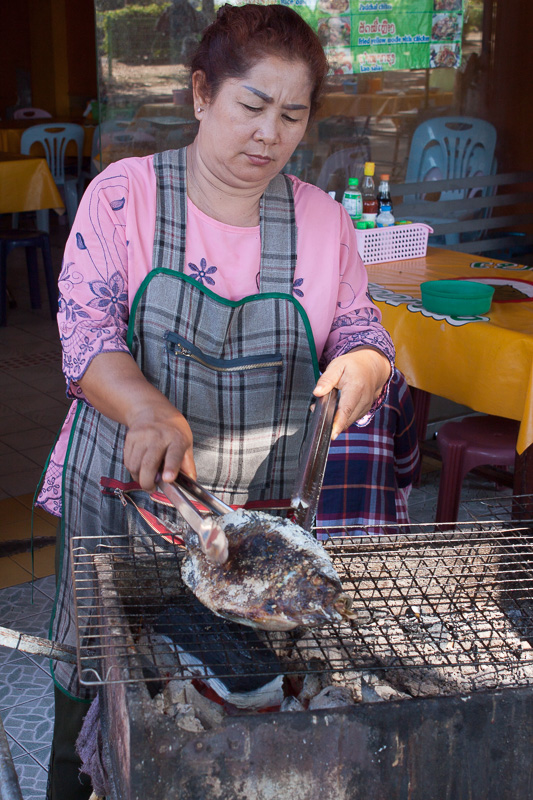
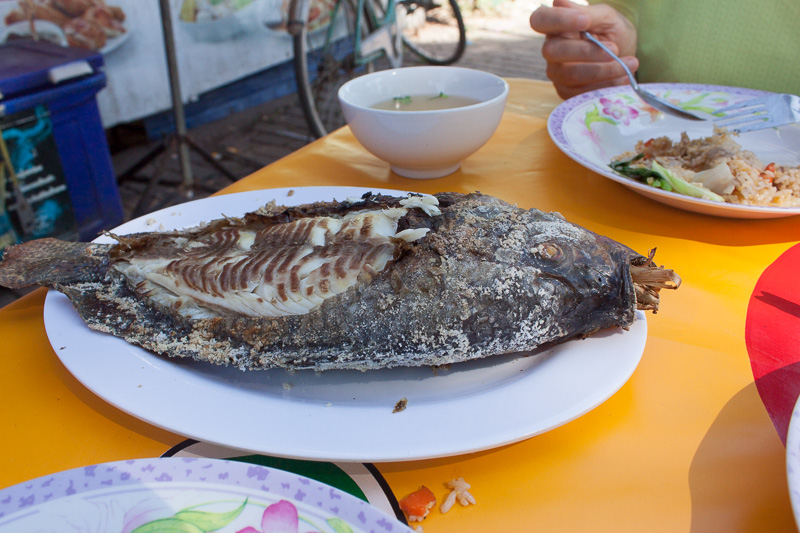
This fish is stuffed with lemon grass and other herbs:
What came first, the chicken or the egg?
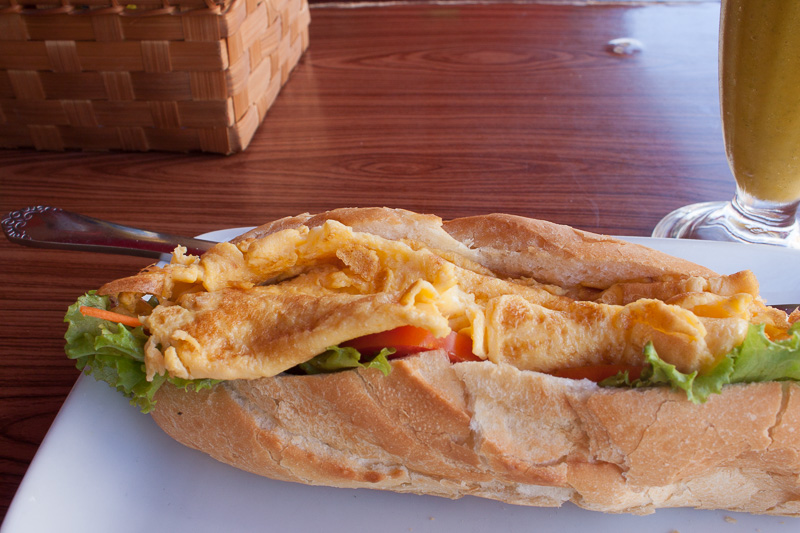
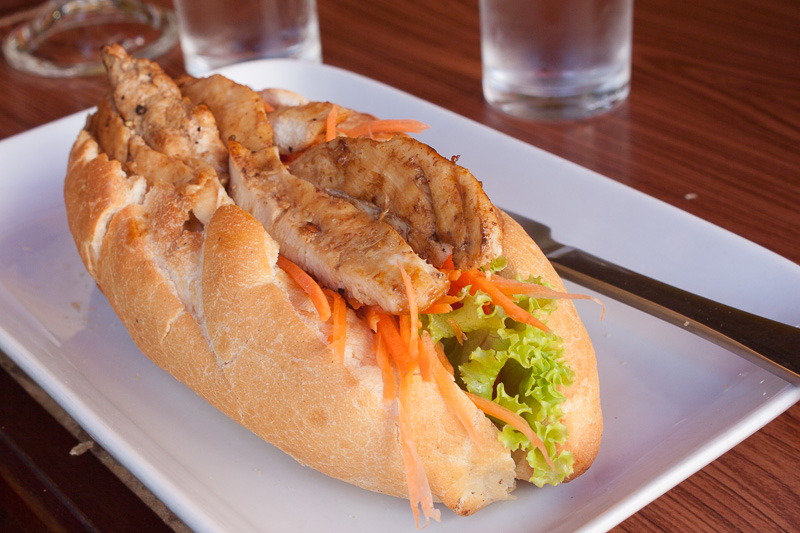
Another vestige of French colonialism: baguettes. These are sandwiches from Noy’s Fruit Heaven. They are akin to the Vietnamese bánh mì, but with no hot peppers. In this case, my egg sandwich came before Mary’s chicken sandwich.
Amphone
Amphone is an elegant restaurant on a small lane in Vientiane that is rumored to have been Anthony Bourdain’s introduction to Laos food in 2008. We won’t hold that against them – there was none of the signature Bourdain bravado in sight and the food remains true to the owner’s grandmother’s recipes.
In fact, it was delicious!
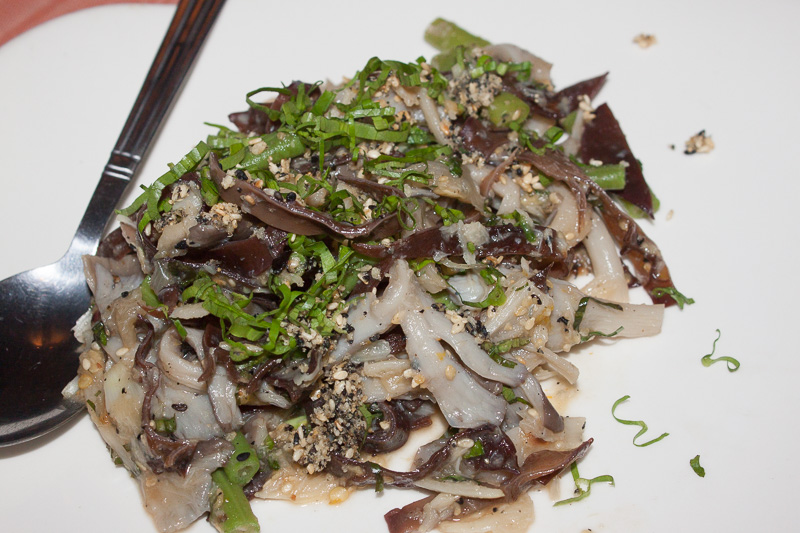
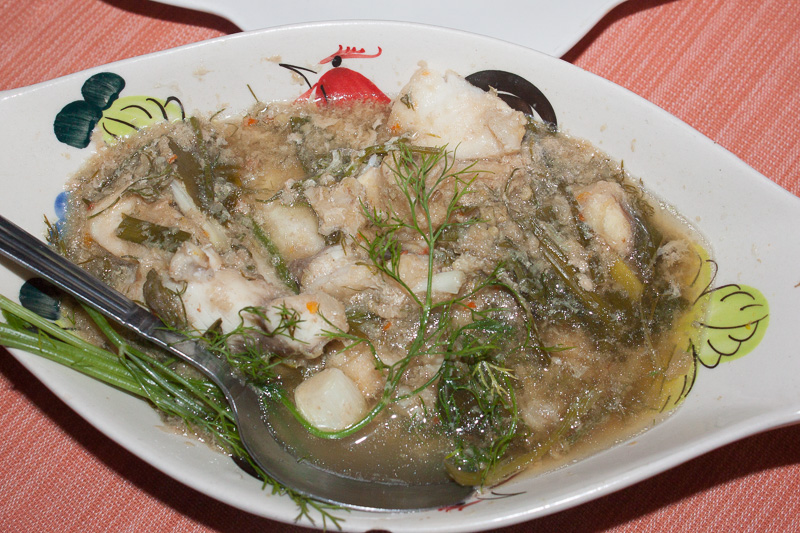
Here are a couple of dishes we had – a mushroom jeow and river fish with dill. The dill / fish connection is quite common in Laotian food.
Noodle soups
 |
Click here for more on Laotian interpretations of the universal East Asian dish. |
—