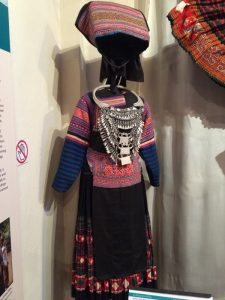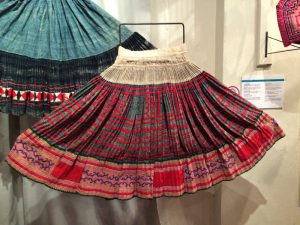
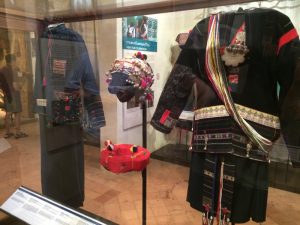
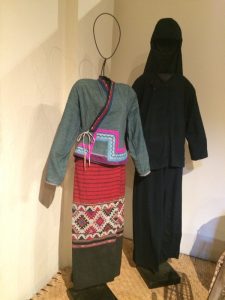
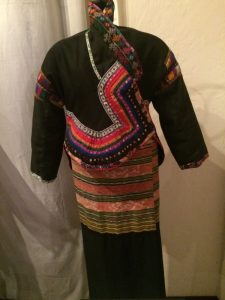
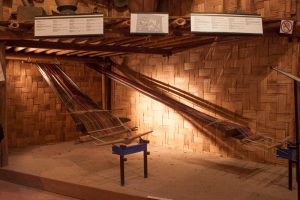
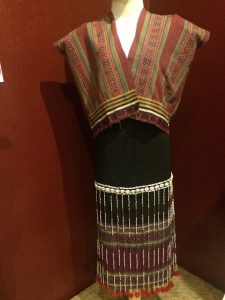
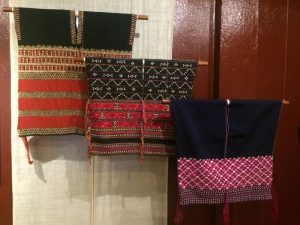
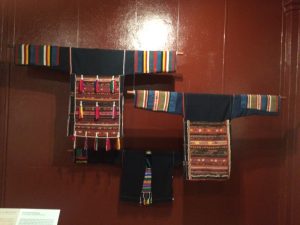
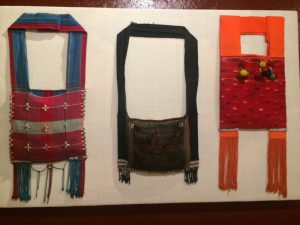
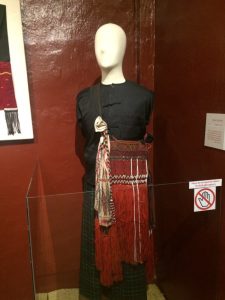
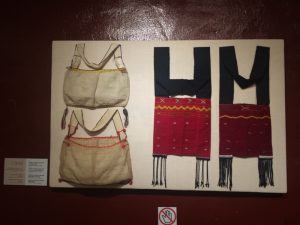
If you are interested in textile arts of the different ethnic groups in Laos, the Traditional Arts & Ethnology Centre (TAEC) in Luang Prabang is the place for you! The permanent exhibit shows samples of traditional dress of several groups. They also had a special exhibit, “Seeds of Culture: From Living Plants to Handicrafts” while we were there.
There is a strong emphasis on recognizing the diversity of people in Laos and characteristics of the different groups. I found the displays very informative, and have quoted them liberally throughout this section. Quoted sections are indicated in italics.
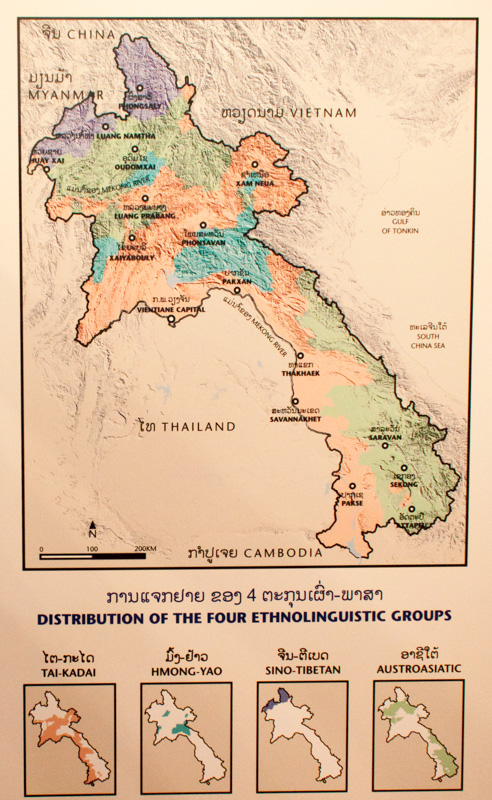
Laos occupies an area of 236,800 km2, a size slightly larger than Uganda and slightly larger than Uganda and slightly smaller than the United Kingdom. Laos’ 16 provinces stretch 1,162 kilometres from north to south, with terrains ranging from mountain ranges over 2,000m high to the Mekong river valley at 70m above sea level. The diverse landscape of Laos is mirrored in its ethnic composition and population distribution.
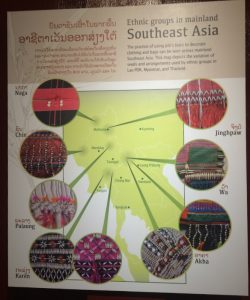
In northern Laos, ‘ethnic minorities’ are actually the majority of the population, consisting of primarily Austroasiatic, Sino-Tibetan and Hmong-Yao language speakers. The map here indicates the distribution of the four major ethnolinguistic groups found in Laos with their principal sub-groups.
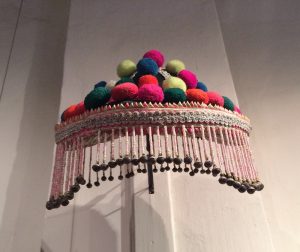
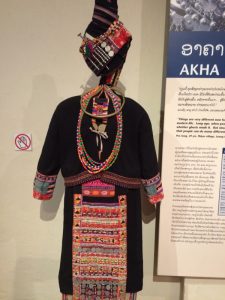
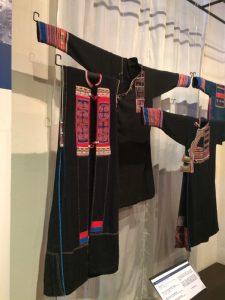
For details on the following outfits, click on the small pictures below:
|
|
|
 |
 |
 |
 |
 |
 |
 |
 |
 |
 |
 |
 |
 |
 |