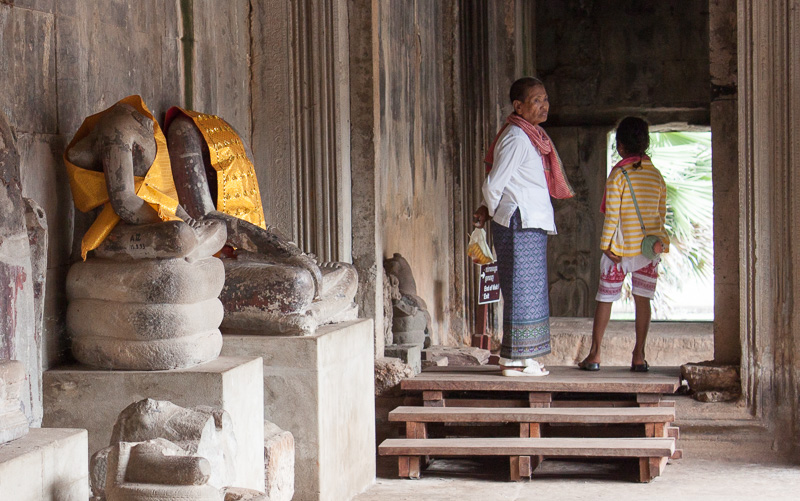
The woman on the left is part of a very small group — only 4% of Cambodians are 65 and over, compared to 15% of Americans.
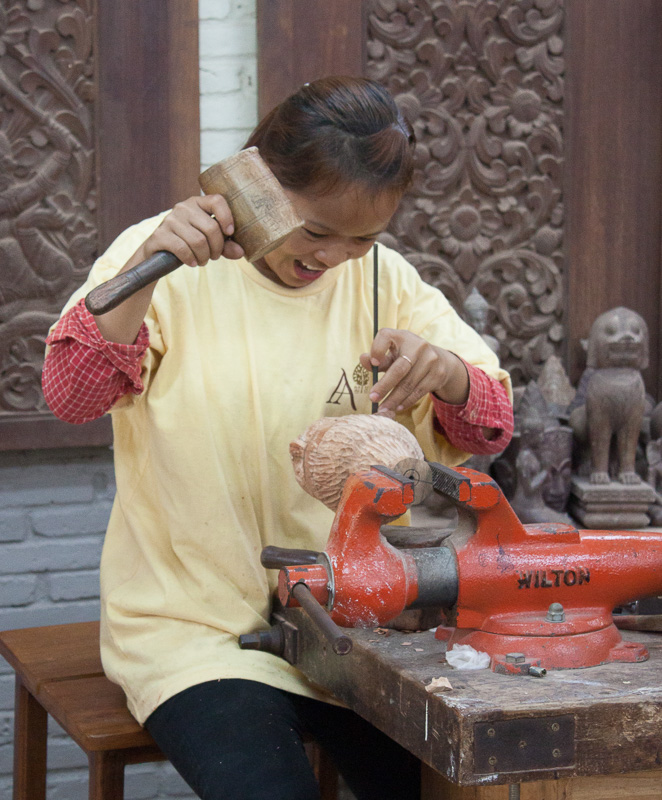
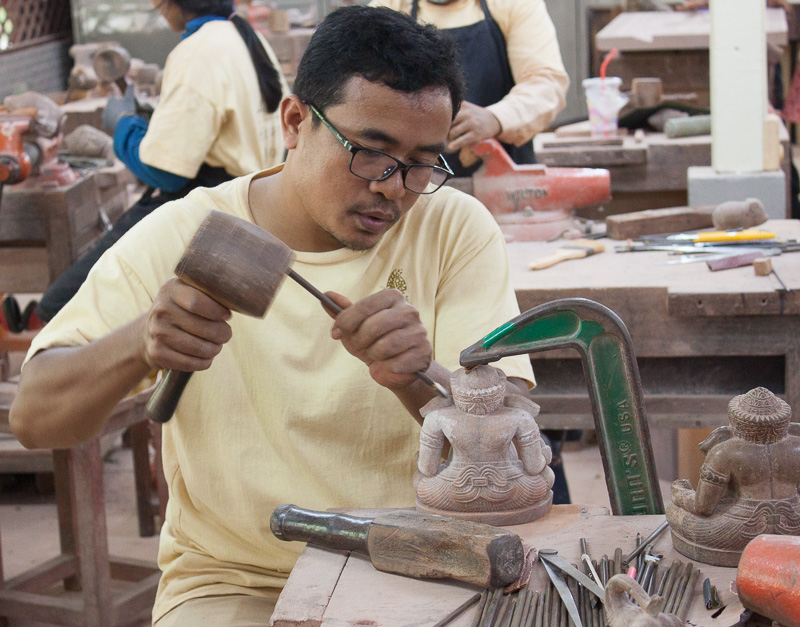
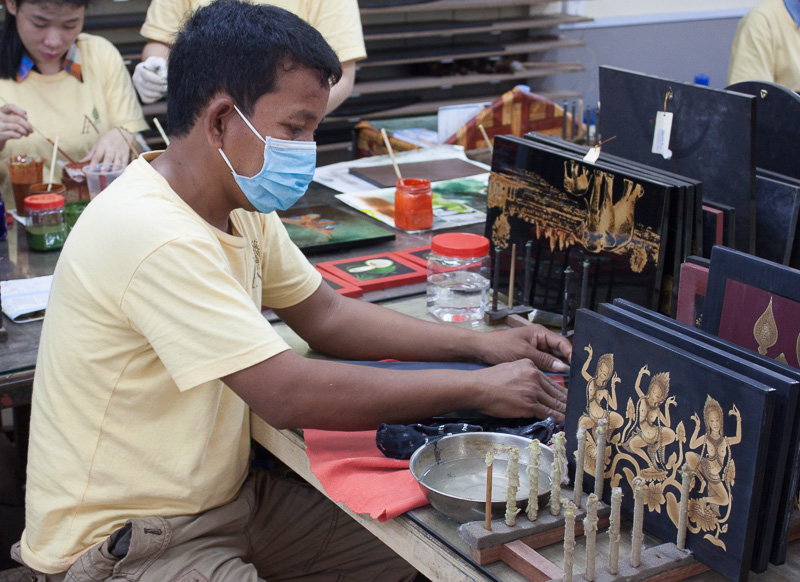
Artisans Angkor started as a training program to teach traditional arts and crafts to rural youths. They now employ 1100 in 48 workshops in Siem Reap province.
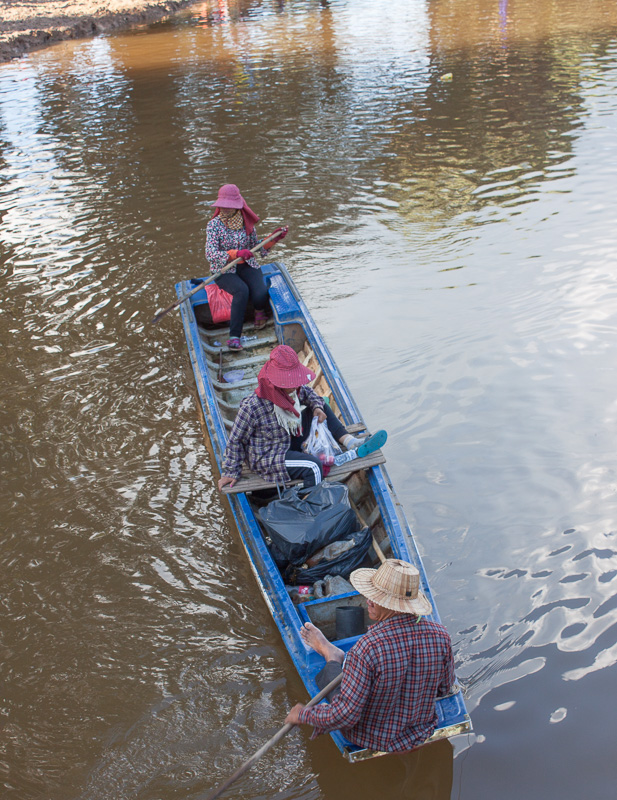
Other ways to make a living are decidedly more challenging. These people seem to be cruising the river looking for bottles and other bits of refuse:
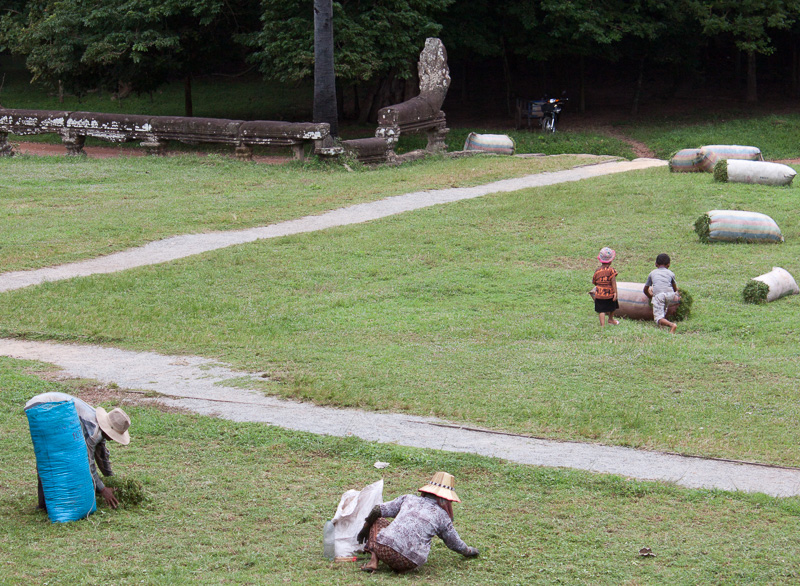
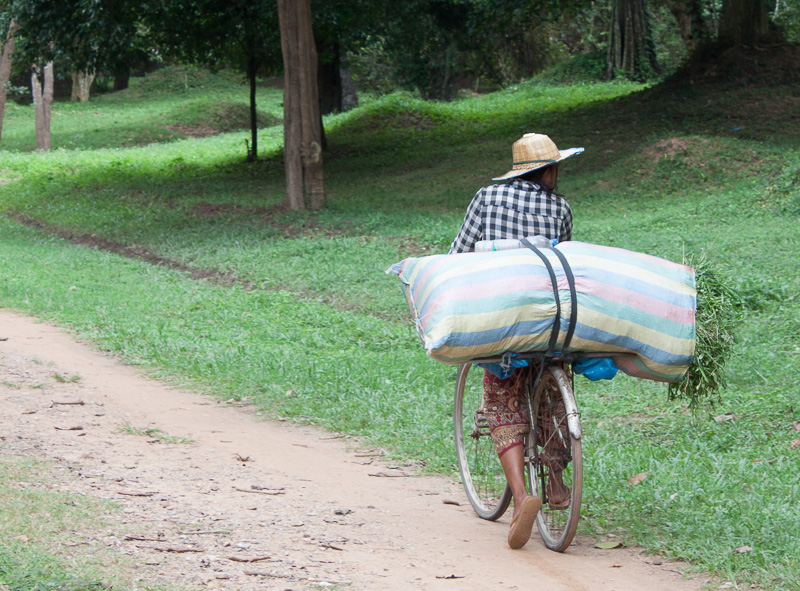
We also saw a few people mowing the grass by hand at Angkor Wat. The clippings are bundled up and hauled off. My guess is they are used to feed cattle. Note the children helping to move the bales; the small one on the left tried but couldn’t roll the bale, so the bigger one on the right had to step in to help.
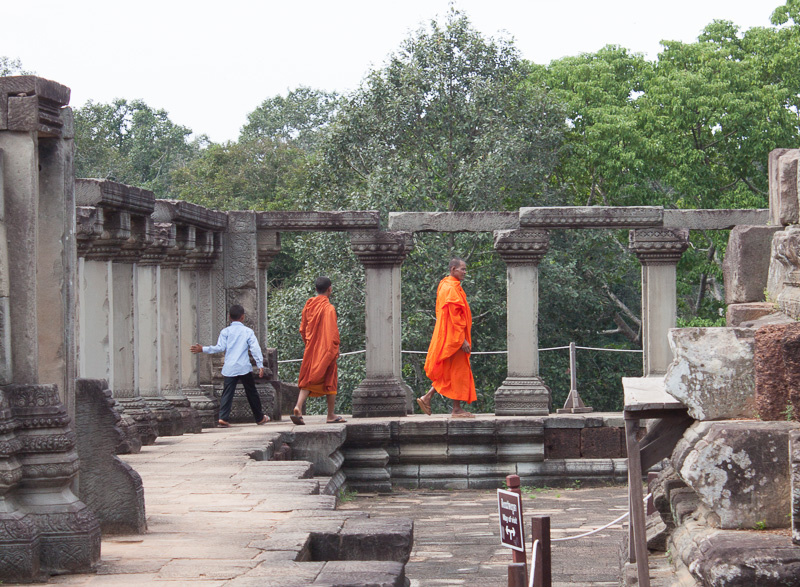
Monks are everywhere, including all the tourist traps. These are atop the Baphuon temple at Angkor Thom:
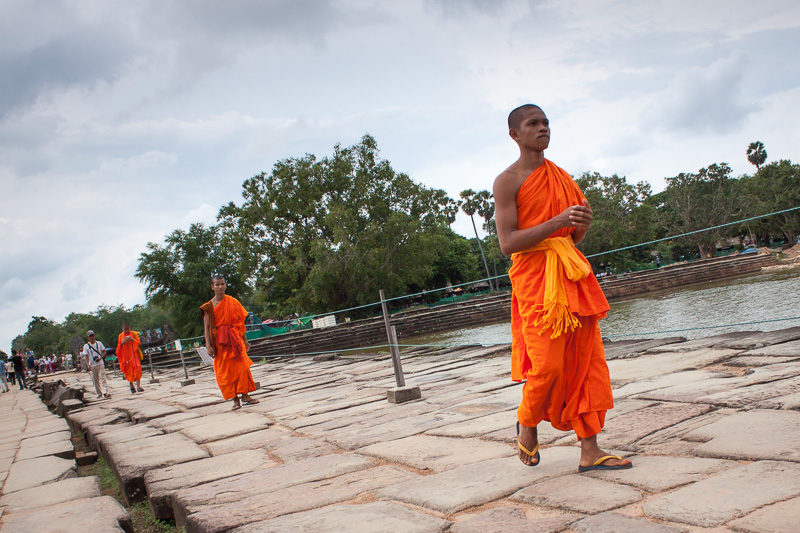
These three are on the causeway across the moat at Angkor Wat:
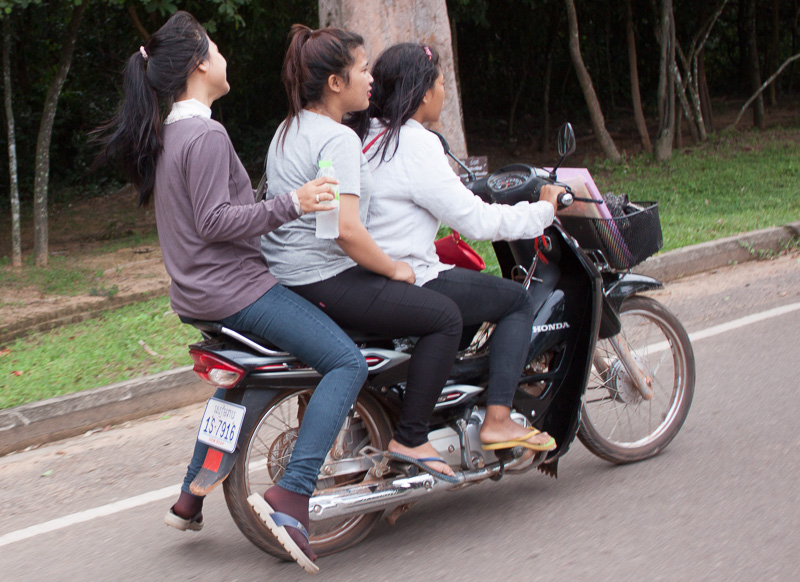
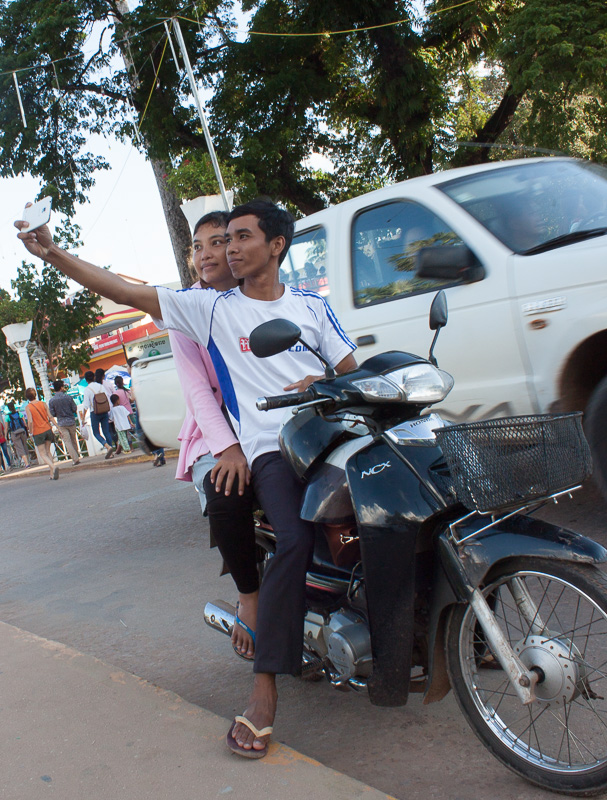
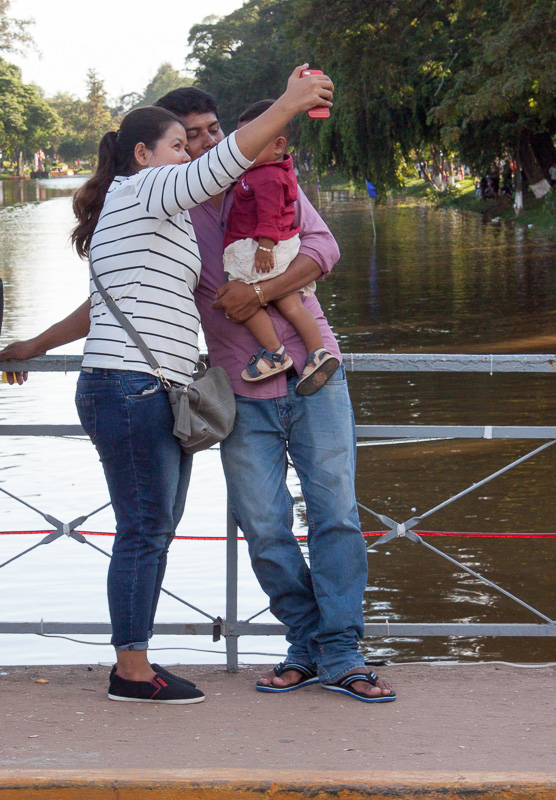
Scooters and smart phones are ubiquitous. However, we didn’t see anybody sharing a phone …
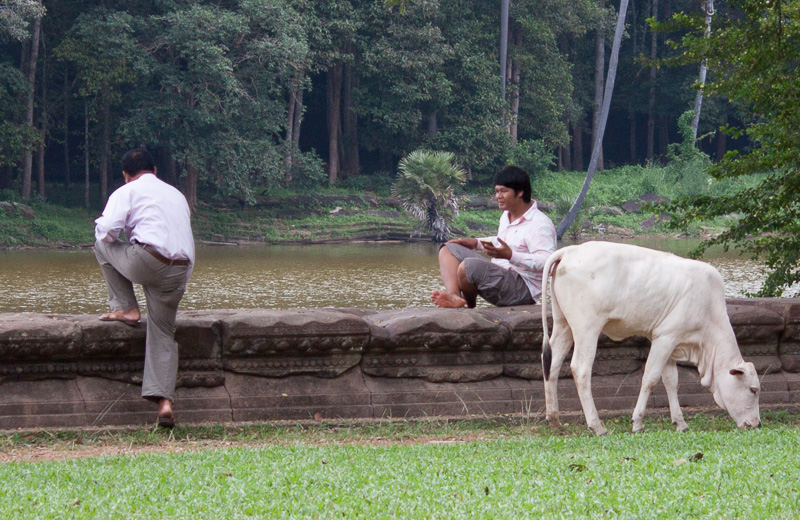
… unless you count selfies:
The tourist trades
With more than 2 million visitors a year coming to Angkor Archaeological Park, one would expect to see many of the locals employed by tourism, like these youths peddling souvenirs and guidebooks at Banteay Srei.
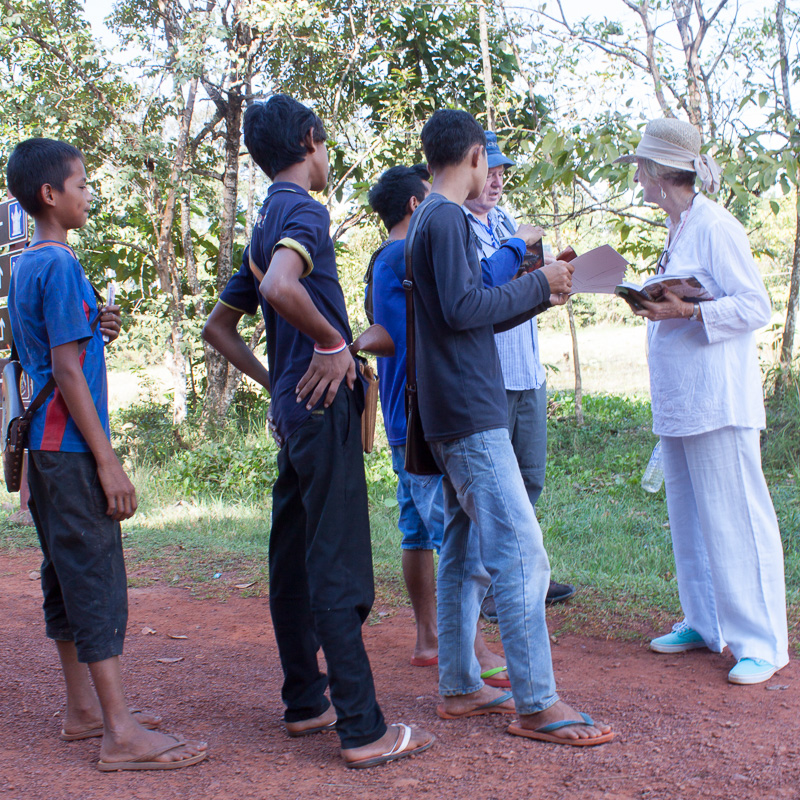
Click here for more pictures of others that make a living from tourism.
Musicians
At some tourist attractions, we saw groups of handicapped people playing traditional Khmer music. They are land mine survivors.
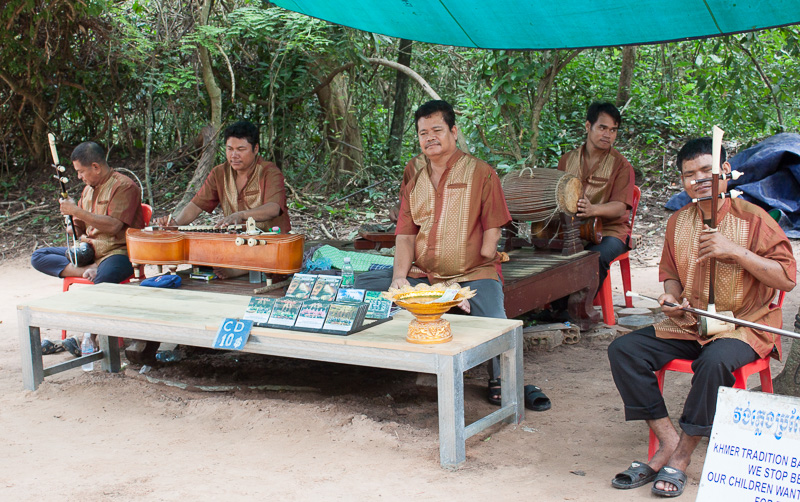
Click here for more pictures of musicians.
Children
The population of Cambodia is very young. Every other person is under 24. One out of three is under 14.
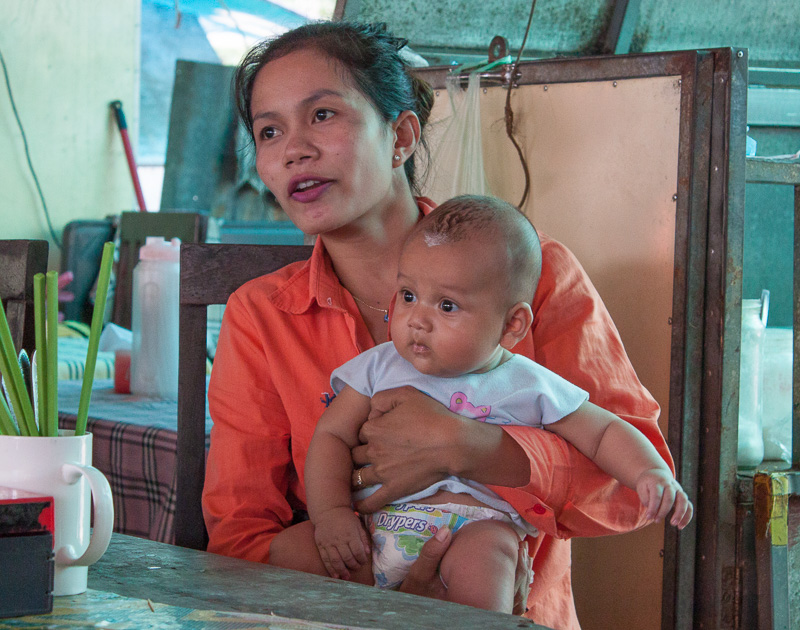
Click here for more pictures of the children.
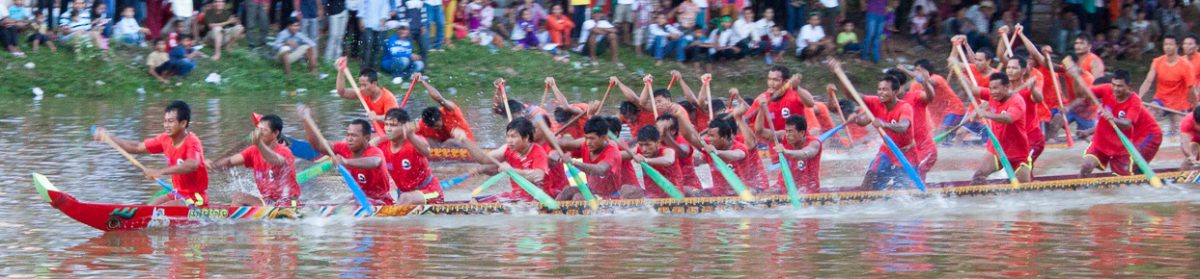
Boat races
Traditionally Cambodians celebrate the Water Festival every year. It typically takes place after the monsoons. Boat races are a major part of the festivities.
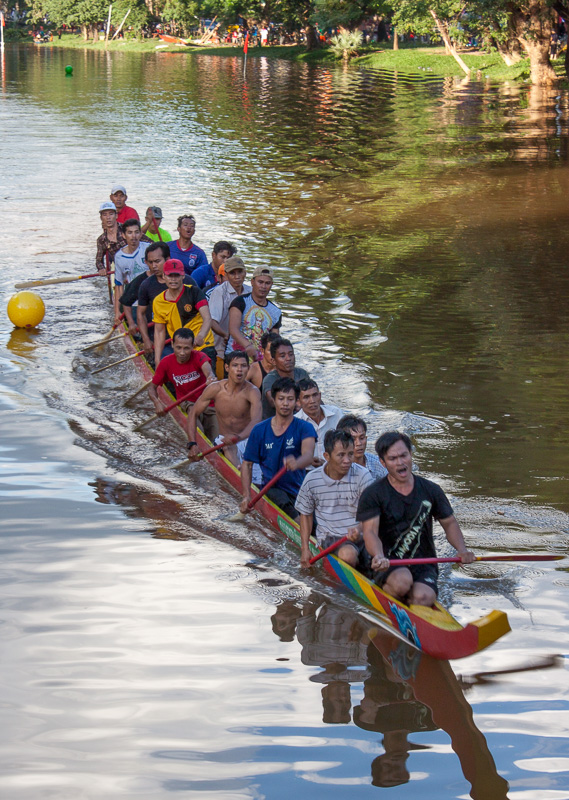
Click here for more boating pictures.
—