

Hmong Du. Headscarf, jacket, skirt, aprons made by Mao, 1989. Natao Village, Houaphan Province.
Necklace, 1992, Luang Prabang Province
Skirt of Indigo-dyed hemp batik, appliqued cotton. Jacket, skirts and aprons mix of handwoven cotton and market-bought cloth, embroidery, applique. Necklace of aluminium.
The Hmong Du (sometimes known as Black Hmong) reside primarily in Houaphan and Xieng Khouang Provinces, in north-eastern Laos.
Historically, Hmong families had few material possessions due to their semi-nomadic lifestyle. Her clothing was the only thing a woman would have taken when she married and moved away from her home village. It was therefore her identity; indicating ethnicity, displaying wealth and advertising the wifely credentials of creativity, patience and diligence.
The necklace has three sao or ‘locks’, symbolizing locking the soul in the body. Traditionally made of silver, nowadays, few families can afford them and it’s more common to see aluminium.
Details:
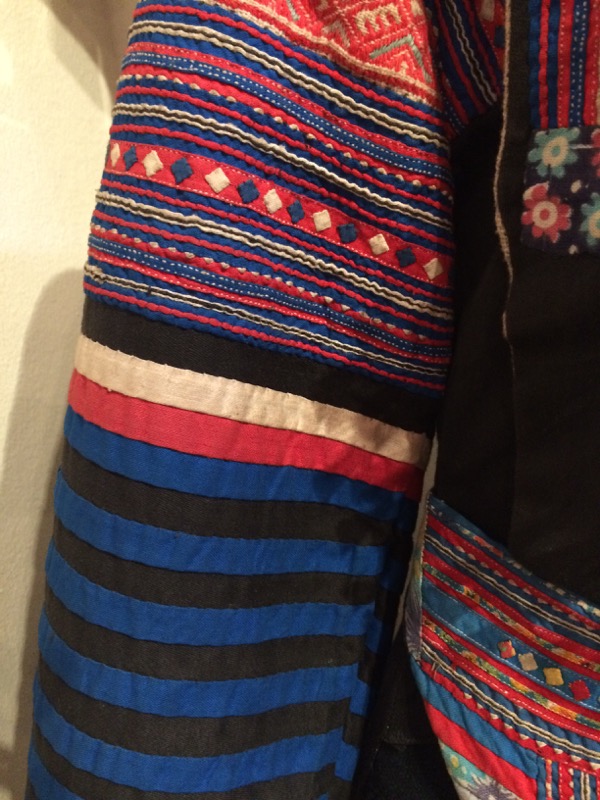
Detail of sleeve.

Detail of skirt.