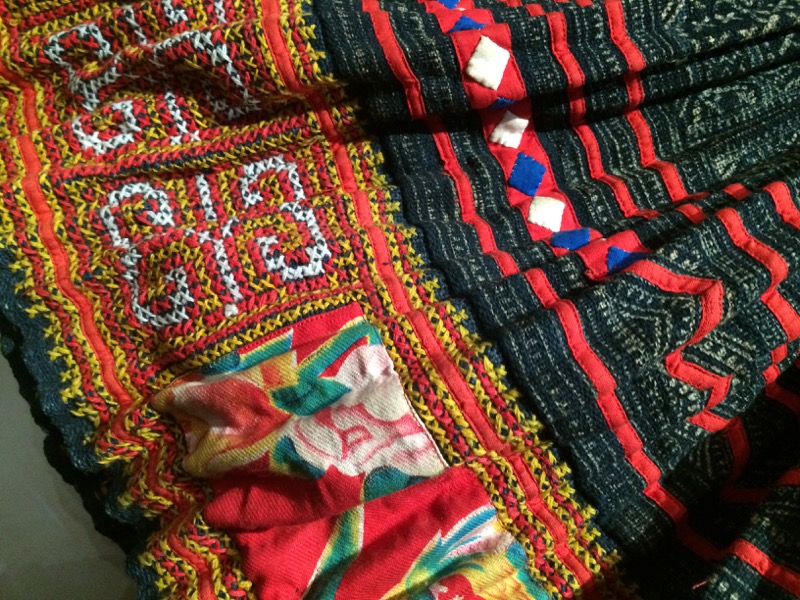
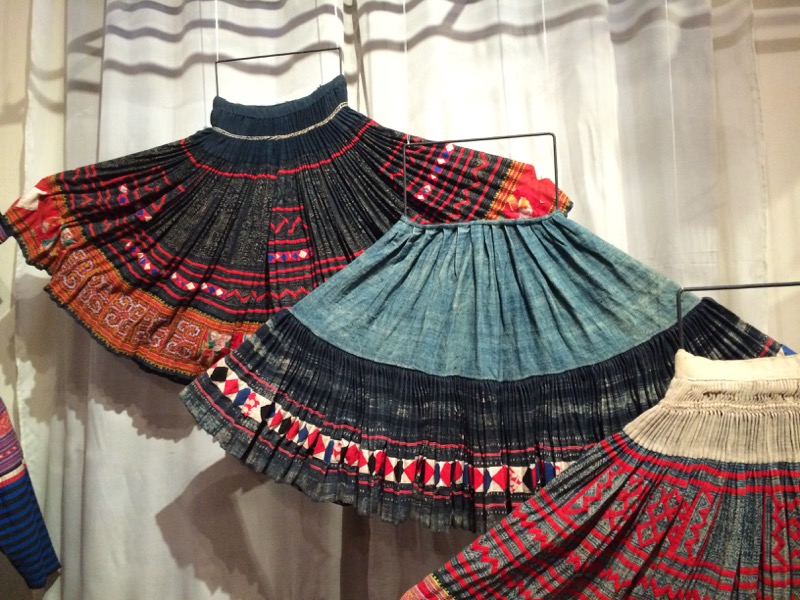
Top skirt:
Mong Njua. Luang Prabang, Luang Prabang Province
Batik indigo-dyed hemp, ribbon, embroidery.
Middle skirt
Mong Njua. Made by Noh, Phonsaly Province
Batik indigo-dyed hemp, ribbon, embroidery.
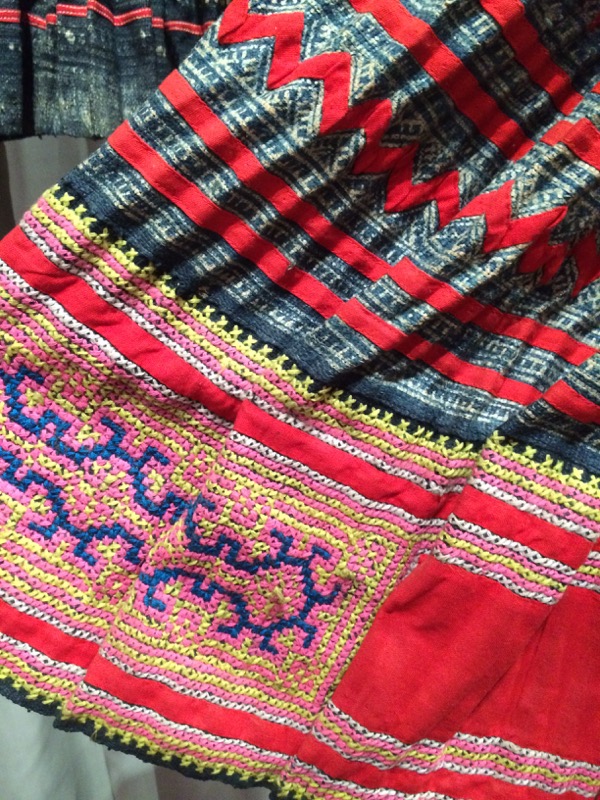
Bottom Skirt
Mong Njua. Luang Prabang, Luang Prabang Province
Batik indigo-dyed cotton, undyed cotton, ribbon, embroidery.
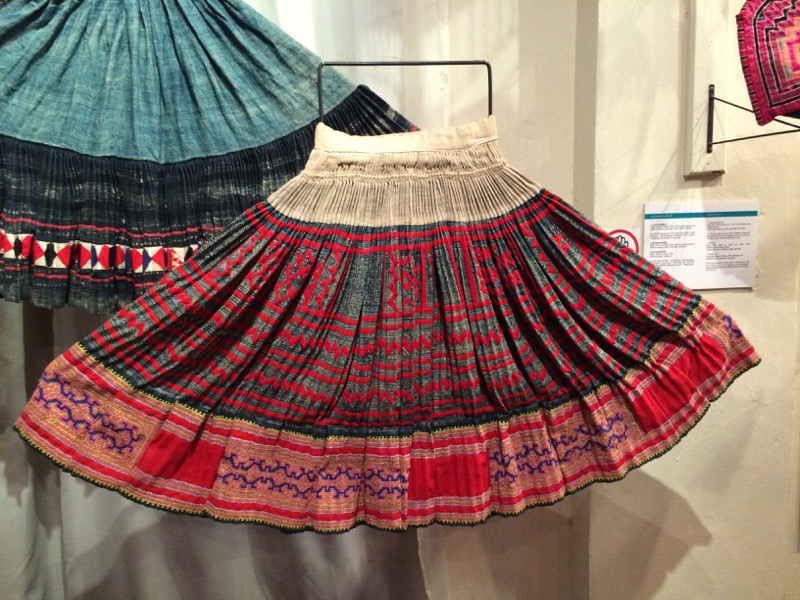
Using up to six meters of handwoven hemp or cotton cloth, these skirts are surprisingly heavy. Hmong batik begins with drawing designs in beeswax on the undyed cloth. It is then dyed blue with the indigo plant, which cannot penetrate the wax areas. Finally, the cloth is boiled to melt away the wax and reveal the pattern. Examples of the cloth undergoing this resist-dye process are desplayed to the right.
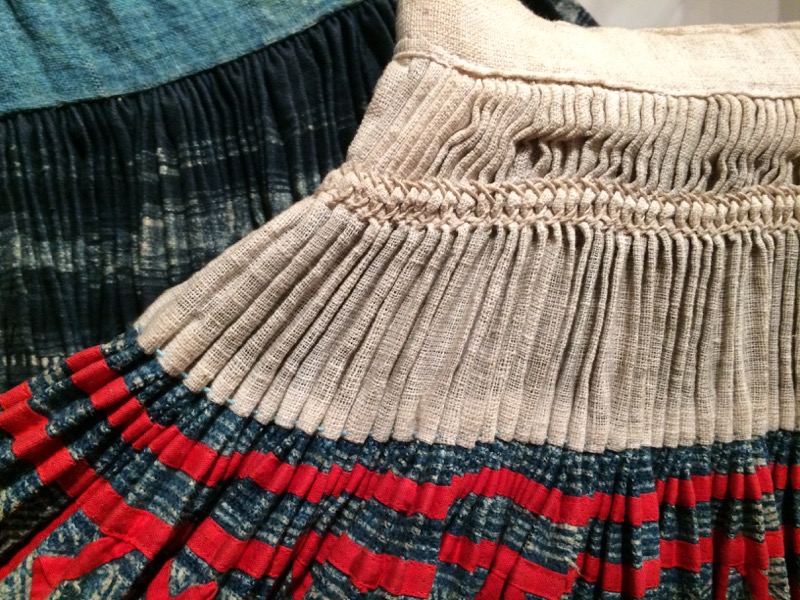
The accordian pleat is achieved by neatly folding the fabric, stitching it tightly in place with a long thread and storing it that way to set. Sometimes, two narrow pieces of wood are bound to the ends to compress the pleats further. When the time comes, the thread is removed and the skirt opened up for wearing.
Traditionally every Mong household would have produced its own textiles, girls learning the arts of embroidery, applique, indigo-dyeing and batik from a young age. More recently, women often purchase batik cloth from Hmong traders and embellish it with their own applique and embroidery.
These days, factory reproductions made of fluorescent printed polyester are also common.
Detailed pictures: